Tennessee Fire Extinguisher Requirements: What to Check and When to Schedule Service
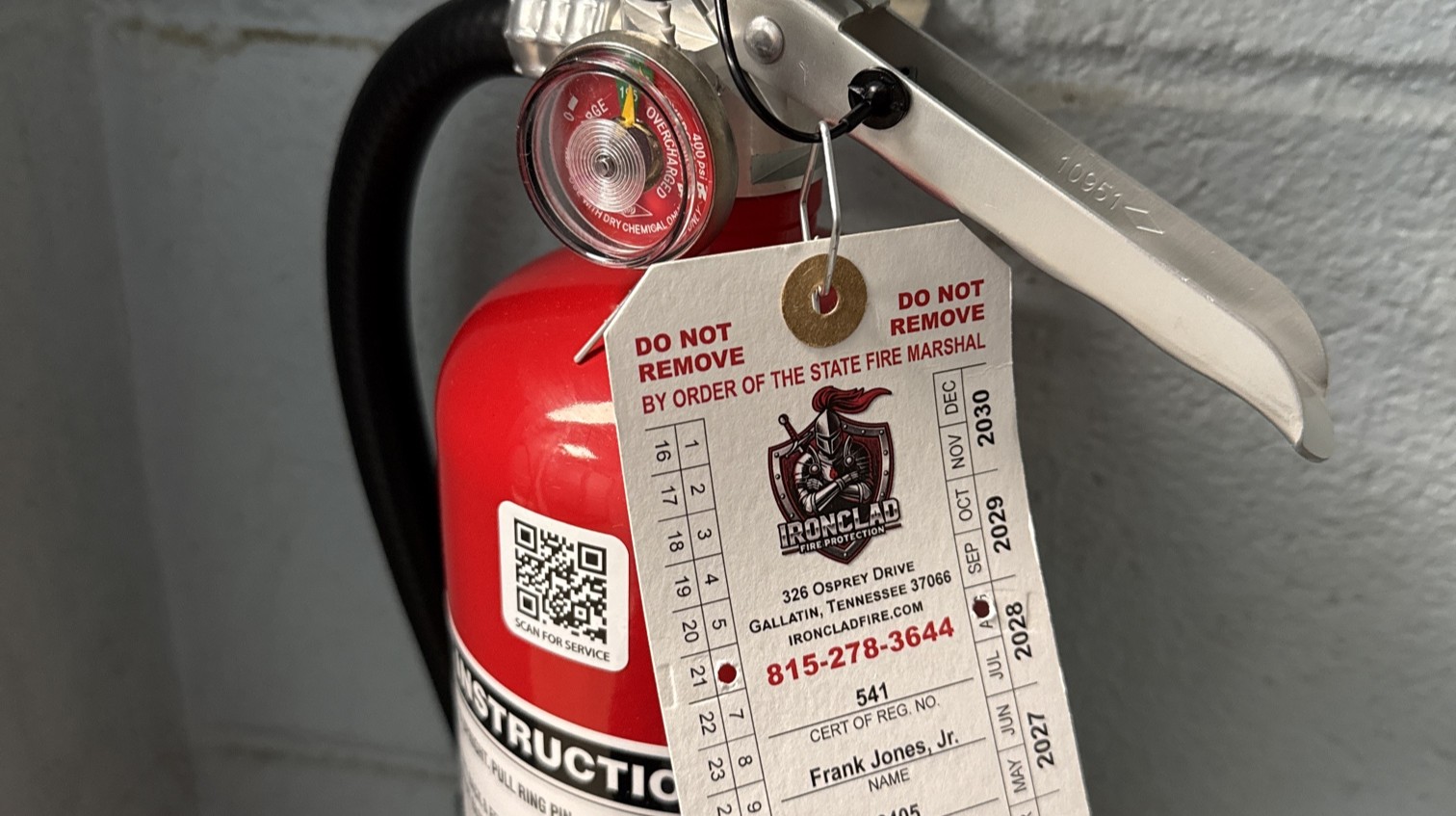
If you manage a building, you need to know whether your fire extinguishers need inspection. You also need to know how to read the tag.
Plan for monthly visual checks and annual professional inspection. The tag helps you find the last service date. Equipment type, placement, and condition matter too.
This guide explains what to look for, what your staff can handle, and when to call a licensed specialist.
Your Requirements at a Glance
Whether you own the building or handle its safety and maintenance, start with these responsibilities.
| Requirement | What to do | Who handles it |
|---|---|---|
| Suitable extinguishers | Match the extinguisher type and rating to the hazards and space. | Your service provider checks selection and coverage. |
| Accessible placement | Keep units visible, properly mounted, and reachable without moving stored items. | Your staff keeps access clear; your provider checks the layout. |
| Monthly visual checks | Check each unit and record the date, your initials, and any problems. | A knowledgeable person on your team can do this. |
| Annual maintenance | Schedule service before 12 months pass since the last annual maintenance. | A registered Tennessee firm performs the work. |
| Additional service and testing | Track the intervals for each extinguisher type. | Your provider identifies what is due. |
NFPA 10 is the standard for portable fire extinguishers. Its inspection and maintenance guidance distinguishes routine checks from professional service.
Tennessee also regulates the firms performing that service and the information recorded on their tags.
Which Extinguishers Does Your Building Need?
Match the extinguisher to the hazard and its rating to the space. A small unit with the right letters can still provide too little coverage.
An ABC extinguisher covers ordinary combustibles, flammable liquids, and energized electrical equipment. Ordinary combustibles include paper, wood, and cardboard.
Commercial cooking involving oils and fats needs Class K protection. Combustible metals need an agent suited to the particular metal.
The label identifies the extinguisher’s classes and ratings. The numbers beside A and B indicate capacity within those classes.
Your building’s hazards, floor area, and walking routes determine the required ratings and number of units. Buying one extinguisher per room is not a reliable way to plan coverage.
Our extinguisher types guide explains the choices, including equipment for commercial kitchens and sensitive electronics.
Placement Means You Can Find and Reach It
Extinguishers belong along normal walking routes, including routes toward exits. Keep storage and furniture clear of them.
NFPA 10 sets a 75-foot maximum travel distance for Class A protection. Measure the route someone actually walks, including turns around shelving and through doors.
Floor-area limits also apply. Other hazards have different distance rules, so 75 feet is not a universal allowance.
Mount hand-portable units on suitable brackets or hangers, or install them in cabinets. For units weighing 40 pounds or less, the top must be no higher than 60 inches.
Heavier hand-portable units have a 42-inch maximum height. Keep the bottom at least 4 inches above the floor. Wheeled extinguishers are an exception to these mounting rules.
These limits come from NFPA 10, summarized in NFPA’s placement guide. Our 75-foot rule guide explains coverage and the exceptions in more detail.
Ironclad’s Field Experience
I find extinguishers with current tags still sitting on the floor. I have also found tagged units mounted around 65 inches high.
A current tag does not correct a mounting problem.
When Do Extinguishers Need Inspection and Service?
The monthly check and annual service are separate jobs. A current annual tag does not replace your monthly checks.
| When | What is due | Which extinguishers |
|---|---|---|
| When installed, then monthly | A visual inspection, with a record of each monthly check. | Portable extinguishers checked manually; approved electronic monitoring follows separate provisions. |
| At least annually | Professional maintenance and its service record. | Portable extinguishers, including those never used. |
| Every six years | Internal examination and maintenance. | Rechargeable stored-pressure dry chemical units subject to 12-year hydrostatic testing. |
| At the applicable test interval | Hydrostatic testing, which checks the cylinder under pressure. | Common rechargeable dry chemical units: 12 years. CO2 and water units: generally five years. |
| When a problem is found | Prompt assessment and service or replacement. | Any unit with damage, discharge, leakage, or another deficiency. |
The six-year and hydrostatic intervals depend on the extinguisher type. Nonrechargeable units do not receive six-year internal maintenance. Their replacement requirements still apply.
NFPA 10 covers these intervals, and OSHA’s extinguisher rule also sets workplace maintenance and testing duties.
Our inspection frequency guide explains how to find the relevant dates and compare servicing with replacement.
What Can Your Staff Check?
You can perform routine monthly checks without hiring someone for each visit. Assign the job to someone who understands the equipment and knows when to report a problem.
Use the manufacturer’s instructions for each model. Include these checks during your walkthrough:
- Check access: Confirm the unit is present, visible or identified by a sign, and easy to reach.
- Check condition: Look for damage, corrosion, blocked nozzles, missing seals, and an out-of-range gauge where fitted.
- Check readiness: Confirm fullness as instructed, legible operating instructions, and current service records without discharging the unit.
Inspect more often where conditions increase the risk of corrosion, impact, or tampering.
Record the inspection date and inspector’s initials. Keep at least 12 months of monthly records, including findings that need correction.
Clear a blocked approach immediately. Report equipment defects for professional attention instead of waiting for the next annual appointment.
Your monthly initials document your check. They do not replace the professional service tag.
Our common extinguisher mistakes guide shows the physical problems to look for.
Who Can Service Extinguishers in Tennessee?
Hire a registered Tennessee firm for annual service. The firm’s certificate of registration and the specialist’s license are separate credentials.
Tennessee’s registration rule governs firms installing and servicing extinguishers.
A permitted technician can work under a licensed specialist’s direct supervision. Tennessee Code 62-32-204 requires both to work for the same firm.
Your staff’s routine visual checks are separate from this licensed service. Signing a monthly inspection log does not authorize someone to perform annual maintenance.
You can verify credentials through Tennessee’s public license search. The service tag provides the firm and specialist numbers to look up.
How to Read Your Tennessee Service Tag
Read the service date and type of work first. Find the month and year recorded for annual maintenance.
For example, annual maintenance recorded in September 2025 means the next annual maintenance is due by September 2026. Schedule ahead so the interval does not exceed 12 months.
A separate row of monthly initials records visual checks. It does not move the annual service date forward.
Tennessee’s service tag rule requires this information:
| Tag information | What it tells you |
|---|---|
| Firm name, address, and certificate number | Which registered business performed the work. |
| Specialist name, license number, and signature | Which licensed specialist is identified for the work. |
| Service date and type of work | When the visit happened and what was performed. |
| Last hydrostatic test date | The recorded cylinder test date, separate from annual maintenance. |
| Owner name and address | Whose equipment the record identifies. |
| “DO NOT REMOVE BY ORDER OF THE STATE FIRE MARSHAL” | The required notice, printed in capitals. |
A regular service tag must not be red. Under Tennessee’s red-tag rule, a red-tagged portable extinguisher must leave service. It must be replaced with an approved substitute.
Keep any written notice identifying the problem. Have the provider explain the correction and replacement protection.
A missing or unreadable tag leaves you without a clear service record. Ask the provider to confirm the history and arrange service when it cannot be established.
Your Building’s Conditions Still Matter
The State Fire Marshal’s Office lists the 2021 International Fire Code with amendments among its adopted codes.
Local jurisdictions can have their own adopted codes and enforcement responsibilities. Confirm applicable requirements with the fire official responsible for your building.
This overview focuses on existing buildings. Construction sites have separate requirements, covered in our construction extinguisher guide.
Apartment properties also need to distinguish individual units from common areas. Our Tennessee apartment guide covers that question.
Frequently Asked Questions
How many extinguishers does my building need?
The count depends on hazards, extinguisher ratings, floor area, and travel distance. Have your provider review those together when the layout or use changes.
Does a green gauge mean service is current?
No. The gauge indicates pressure, not the last maintenance date. Check the service tag even when the needle is green.
What if annual service is overdue?
Arrange service promptly and give the provider the last documented date. Mention any missing, damaged, or red-tagged units when booking.
Does a current tag mean the whole building complies?
No. The tag records work on an individual extinguisher. It does not establish that the building has suitable coverage or correct placement.
What to Do Next
Check the service dates, assign the monthly walkthrough, and address any equipment problems. Keep your inspection records where the person handling the building can find them.
When hiring service, ask what needs correction and when the provider can come. Clear explanations and reliable communication help you manage the next visit too.
Is your extinguisher service due? Get a quote for fire extinguisher service in Middle Tennessee.